
Training
Individual coaching, measured against a real development plan
Private sessions, small-group work and one development record behind both. Every player gets an assessment, a plan built from it, and proof of what has actually moved.
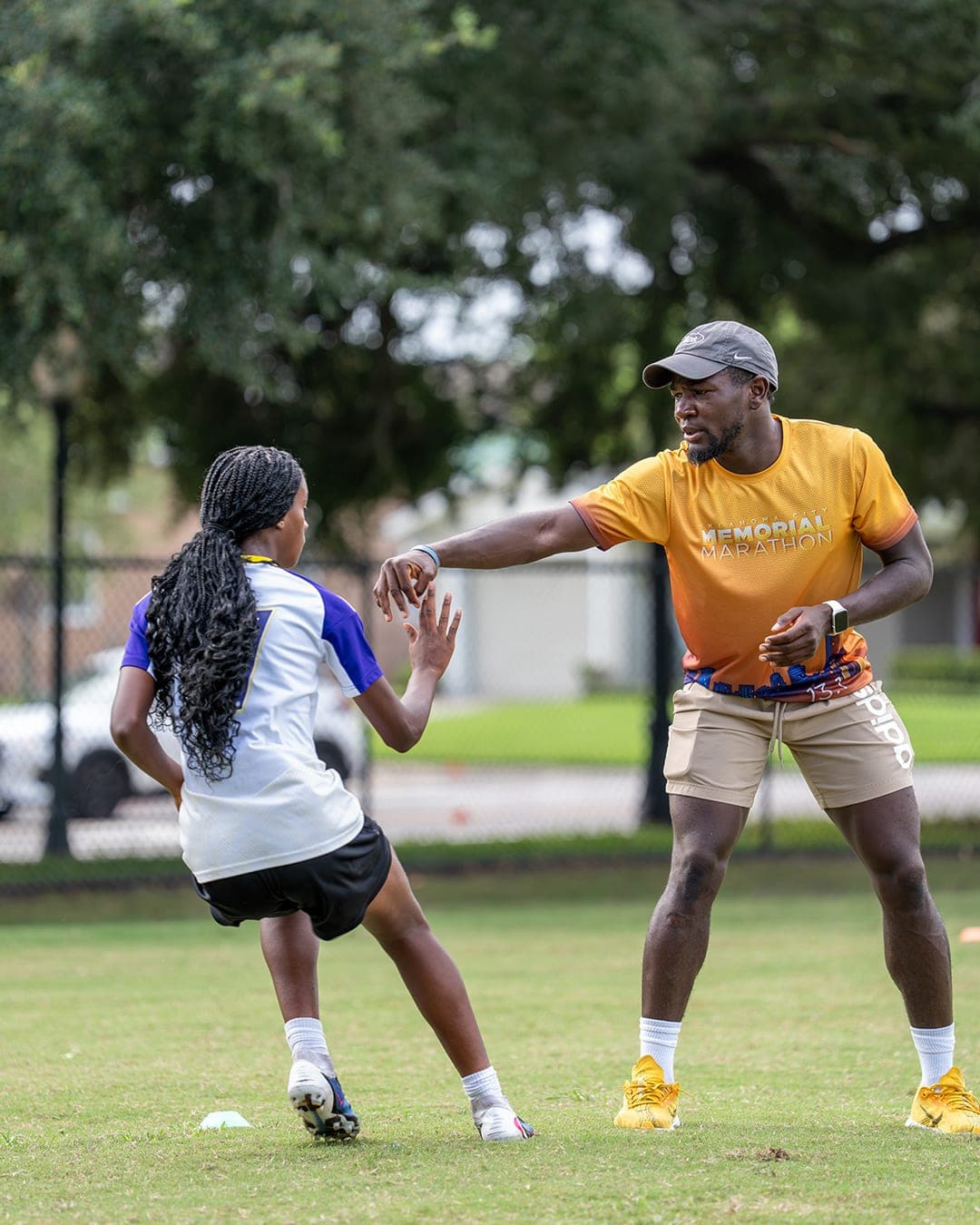
1-on-1 Private Training
Six parts of every private program
Private training is not just a booked hour — it is one part of a development plan the coach maintains for the player.
Personalized development
The session plan comes from the player's assessment and current objectives — not from a generic curriculum.
Position-specific training
A center back, a winger and a keeper do not need the same reps. Work is shaped by the role the player actually plays.
Technical development
First touch, receiving, striking technique, weak foot and 1v1 mechanics trained under realistic pressure.
Tactical development
Scanning, decision making, positioning and movement off the ball — coached through constrained game situations.
Game analysis
Match film is reviewed with the player so training targets what is actually happening in games.
Soccer homework
Every player leaves with specific work to complete before the next session, tracked on their profile.
Session structure
How a private session runs
Sessions are built so that the technical work is always tested under game pressure before the player leaves.
- 1
Warm-up with the ball
Touches, movement patterns and activation.
- 2
Technical block
The core skill of the session, isolated and repeated with correction.
- 3
Pressure block
The same skill under time, space and opponent constraints.
- 4
Game application
1v1s and small-sided situations that force the decision to appear.
- 5
Review and homework
What improved, what is next, and the work to complete before the next session.
Private training is a fit when
- A specific weakness is limiting game performance
- The player is preparing for tryouts or a level change
- Club training does not address individual technique
- The player needs position-specific detail
- Confidence needs rebuilding after a difficult stretch
- The player wants measured progress, not just more reps
Group Training
Competitive environments, individual coaching
Group sessions add the pressure and competition a player cannot get alone — without giving up the individual attention that makes training work.
Small-group training
Two to four players at a similar level. Enough competition to make it real, small enough to correct every player.
Group technical sessions
High-volume technical work — passing patterns, receiving under pressure, finishing — with quality standards enforced.
Position-specific work
Defenders, midfielders, wide players and forwards split into the situations their role demands.
Competitive exercises
1v1s, 2v2s and small-sided games where decisions are made under fatigue and real opposition.
Individual feedback inside the group
Each player gets their own written feedback from the session, recorded on their development profile.
Game analysis
Clips from each player's own games shape what the group works on next, so the session answers something that actually happened on a Saturday.
Soccer homework
Every player leaves a group session with their own work to complete before the next one, tracked on their profile like a private session.
Inside a group session
One group objective. Individual feedback for every player.
A group session has a shared theme, but each player is coached and recorded separately. The group never flattens the individual.
Group objective
1v1 Attacking
Individual feedback
Player A
Excellent change of direction.
Player B
Improve body positioning before the first touch.
Player C
Needs more confidence attacking defenders 1v1.
The Player Development Cycle
Assessment → Training → Game Analysis → Homework → Reassessment
The same cycle runs behind private and group training. A development block typically runs several weeks, ending with a reassessment that sets the next block's objectives. Training without this is just activity.
- 01
Assessment
The player is evaluated across technical, tactical, physical and mental attributes and scored on a consistent scale.
- 02
Training
Private and group sessions are planned against the lowest-scoring attributes that matter most for the player's role.
- 03
Game Analysis
Match film is reviewed to check whether training is transferring into decisions under real pressure.
- 04
Homework
Specific work is assigned between sessions with instructions and a due date, then reviewed by the coach.
- 05
Reassessment
Attributes are re-scored so change is visible, and the development plan is rewritten for the next block.
Evaluation framework
What gets assessed
Every attribute is scored, tracked over time, and tied to the goals and homework a player is given.
Technical
- First Touch
- Passing
- Receiving
- Dribbling
- Shooting
- Finishing
- Weak Foot
- 1v1 Attacking
- 1v1 Defending
Tactical
- Scanning
- Decision Making
- Positioning
- Movement Off The Ball
- Spatial Awareness
- Transition
- Defensive Awareness
Physical
- Speed
- Agility
- Acceleration
- Coordination
- Endurance
Mental
- Confidence
- Focus
- Composure
- Coachability
- Competitive Mentality
Game analysis & homework
What happens between sessions
Both run on private and group training alike. Film checks whether the work is transferring into decisions under real pressure, and homework keeps it moving on the days there is no session.
A film review produces
Film is not watched for entertainment. Clips are labelled by category and tied to an attribute on the player's plan.
- Timestamped coach comments on key moments
- Clips grouped by theme — scanning, transition, finishing
- A short written game report for the player
- Updated objectives on the development plan
- Homework aimed at the specific decision that broke down
Homework a player is given
Development stalls on the days nobody is watching, so every session — private or group — ends with something specific to take away.
- Work tied to the attribute currently being developed
- Written instructions and a due date, not a vague suggestion
- Submitted by the player, then reviewed by the coach
- Visible to parents on the player’s profile
- Carried into the plan for the next session
Book training
Tell us about the player and what they need to improve. The first session is an assessment that produces their development plan — and players and parents get access to the same record the coach works from.